


Cart 0
Major Challenges in Viticulture and Enology for 2027
2026 has introduced me to a new reality in viticulture and enology, one that I believe will define the wines of the coming years. We still don’t know whether this shift is ultimately positive or negative, but what is clear is that we must adapt. Both our enological and viticultural approaches need to evolve — and viticulture, above all, is where the change begins.
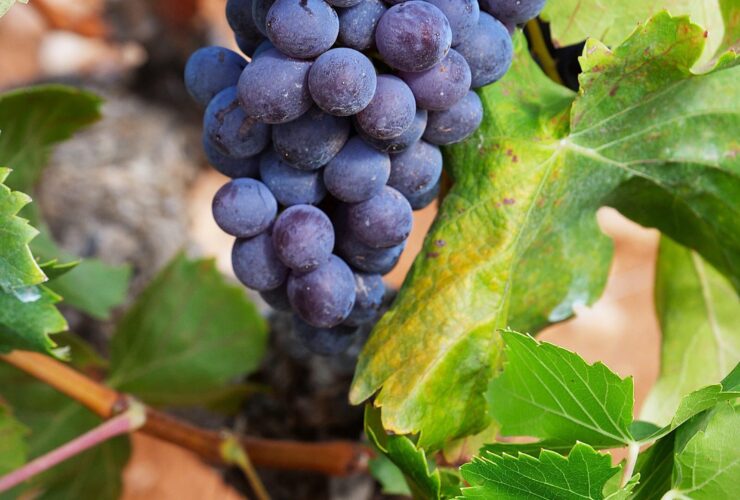
This harvest has shown us what happens when rainfall decreases year after year. The vine produces slightly fewer leaves, soil reserves drop, field capacity shrinks, and the plant suffers more. That stress expresses itself very clearly: the berries are smaller.
Smaller berries mean greater concentration. But the market isn’t asking for concentration; it’s asking for freshness. And that gap between what the vine gives us and what the market wants is exactly where our work must change.
What I’ve observed — and what it signals for the future:
- Less rainfall → fewer leaves → reduced photosynthetic capacity.
- Lower soil reserves → higher plant stress → smaller berry diameter.
- Smaller berries → higher concentration, which does not align with the growing demand for freshness.
- Rapid chlorophyll loss and early signs of raisining are appearing sooner each year.
These patterns are not temporary. They are the beginning of a new viticultural landscape. So, what needs to be done?
Viticulture: what I applied this year and will continue applying
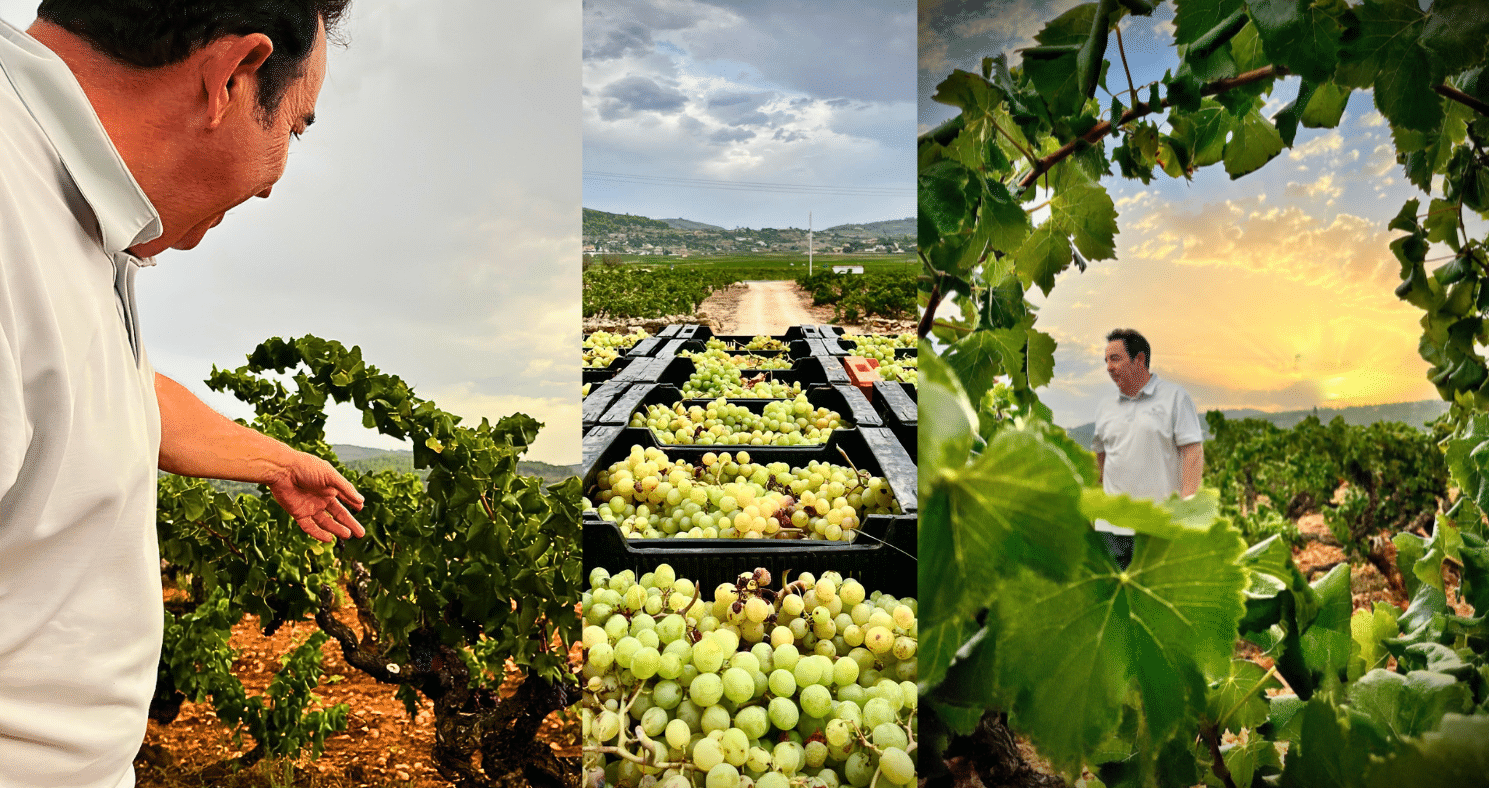
- Soil tillage and removal of summer cover crops. These practices are essential, so the vine has no competition for water. In dry years — and I expect many ahead — this becomes non-negotiable.
- Reducing crop load. In May, I evaluate cluster counts to understand how much fruit the vine is carrying.
- Lower yields help the plant cope with stress.
- Light tillage supports root efficiency.
- Late shoot tipping prevents excessive vegetative growth, reducing leaf area and allowing the plant to feed the fruit more effectively.
These are adjustments we can implement directly in the field, and they will be increasingly necessary.
Harvest timing: a shift that is here to stay
We’ve had to move harvest dates forward. The vine loses chlorophyll quickly and enters rapid raisining, so harvesting earlier helps us pick berries that are slightly fuller and less dehydrated. I expect future vintages to demand even more anticipation.
Enology: delicate hands for a new kind of fruit
These are years in which extraction requires a touch of magic — and a great deal of restraint.
White wines
- Smaller berries contain:
- More proteins o More tannins
- This means:
- Stronger bentonite clarification
- Whites that are firmer and more structured on the palate
- The need to discard final press fractions, where polyphenols and tannins concentrate
Red wines
- With naturally concentrated berries, massive extraction makes no sense.
- I’ve reduced extraction by about 80%.
- Gentle vinification is essential:
- Presenting less-stressed fruit
- Avoiding harsh tannins
- Crafting wines that are softer, balanced, and honest to the vintage
Conclusion: what this harvest taught me
Despite being one of the most challenging vintages in our history, I’ve made some of the most beautiful and balanced wines of my career. This year has shown me that adaptation is not optional — it is the path forward. The climate is changing, and our wines will change with it. What matters is how we respond.
Pepe Mendoza
See how our vines respond to a changing climate
Visit Casa Agrícola, walk the vineyard and taste our wines directly at the winery.